
This page may contain affiliate links. Learn more.
The Real Reason Your Knees Hurt
Going Down Stairs After 50

Researchers say inflammation and reduced joint lubrication may play a larger role than many people realize.
Many people over 50 first notice knee pain when going down stairs.
This happens because the knee absorbs much more pressure during stair descent than stair climbing.
Going up stairs may feel manageable. But walking down often causes a sharp discomfort or stiffness in the knees that wasn’t there years earlier.
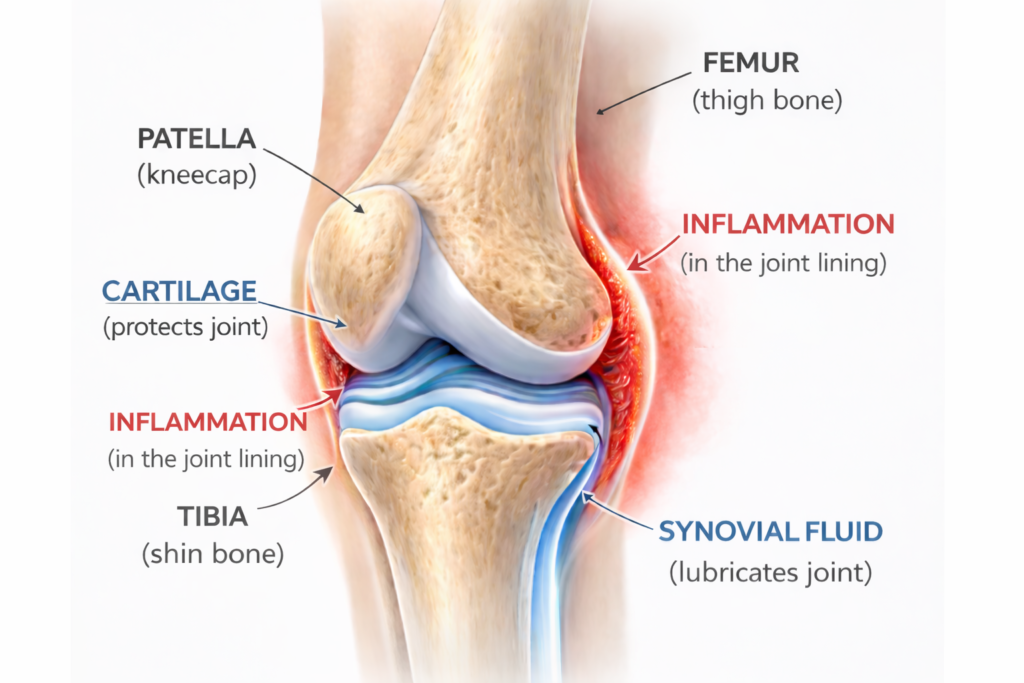
This experience is surprisingly common. In fact, mobility researchers say that knee discomfort during stair descent is one of the earliest signs that the knee joint may be experiencing changes related to inflammation, cartilage stress, or reduced lubrication inside the joint.
Understanding why this happens can help explain why certain approaches to joint support may work better than others.
Why Going Down Stairs Is Harder on Your Knees
When walking downstairs, the knee joint absorbs significantly more force than it does during normal walking.
As the body lowers from step to step, the knee must stabilize and control the body’s weight. This places additional pressure on the cartilage and surrounding joint structures. Over time, several factors may begin to affect how well the joint handles that stress:
• Increased inflammation within the joint
• Reduced natural lubrication between cartilage surfaces
• Gradual wear in the protective cartilage layer
• Muscle imbalances that place additional strain on the knee
When these factors combine, movements that once felt effortless – like going down stairs – can begin to trigger discomfort or stiffness.
Why Joint Mobility Often Changes After 50
As the body ages, joints naturally undergo small changes that can affect mobility and comfort.
One of the most important factors researchers study is joint inflammation. Even low levels of chronic inflammation may affect how smoothly the joint surfaces move against each other.
Another important factor is synovial fluid, the natural lubrication inside the joint capsule that helps cartilage glide smoothly during movement.
When lubrication decreases or inflammation increases, joints may feel:
• stiff after sitting
• uncomfortable during stairs
• achy after activity
• less flexible than before
These changes are part of why many adults begin exploring ways to support long-term joint mobility.
The Problem With Many Traditional Joint Supplements
For decades, the most common joint supplements have relied on ingredients such as glucosamine and chondroitin.
While these ingredients remain widely known, many formulas on store shelves today still rely on approaches that were developed more than 20 years ago.
In recent years, researchers studying joint health have begun exploring newer ingredients that may support joint mobility and inflammation balance in different ways.
Some of these ingredients are designed to help support:
• healthy joint lubrication
• cartilage structure
• inflammation balance
• overall mobility
Because joint discomfort often involves several biological factors at once, many people are now looking for multi-ingredient formulas designed with these newer approaches in mind.
A New Generation of Joint Support Formulas
More recently, some supplement formulas have begun combining several ingredients designed to support joint mobility and healthy inflammation balance.
These newer formulas aim to address multiple aspects of joint health rather than focusing on just one pathway.
As research into joint mobility continues to evolve, many people are becoming interested in how these newer ingredients may support everyday movement and flexibility.
Some joint support supplements now include ingredients specifically studied for their role in helping maintain comfortable joint movement and mobility over time.
Learn More About This Joint Support Approach
If you’re interested in learning more about how newer joint support formulas work and what ingredients researchers are studying, you can explore additional information below.
This page may contain affiliate links. Learn more.
Staying Active as We Get Older
Maintaining mobility becomes increasingly important for people who want to stay active as they age.
Whether it’s walking, exercising, gardening, or simply moving comfortably throughout the day, joint health plays a major role in overall quality of life.

Understanding the factors that influence joint mobility – and the approaches researchers are exploring to support it – can help people make more informed decisions about their health and activity.
Many people who begin experiencing knee discomfort during everyday activities like stair climbing start looking for ways to support their joints so they can continue enjoying the activities they love.
Many people assume knee pain while going downstairs is simply aging. But emerging research suggests a different factor may be involved.
This page may contain affiliate links. Learn more.
Privacy Policy | Affiliate Disclosure | Medical Disclaimer | Contact